Pass SOX, SOC 2, and ISO 27001 Audits Without Chasing Leavers: Automate User Lifecycle Management with SCIM
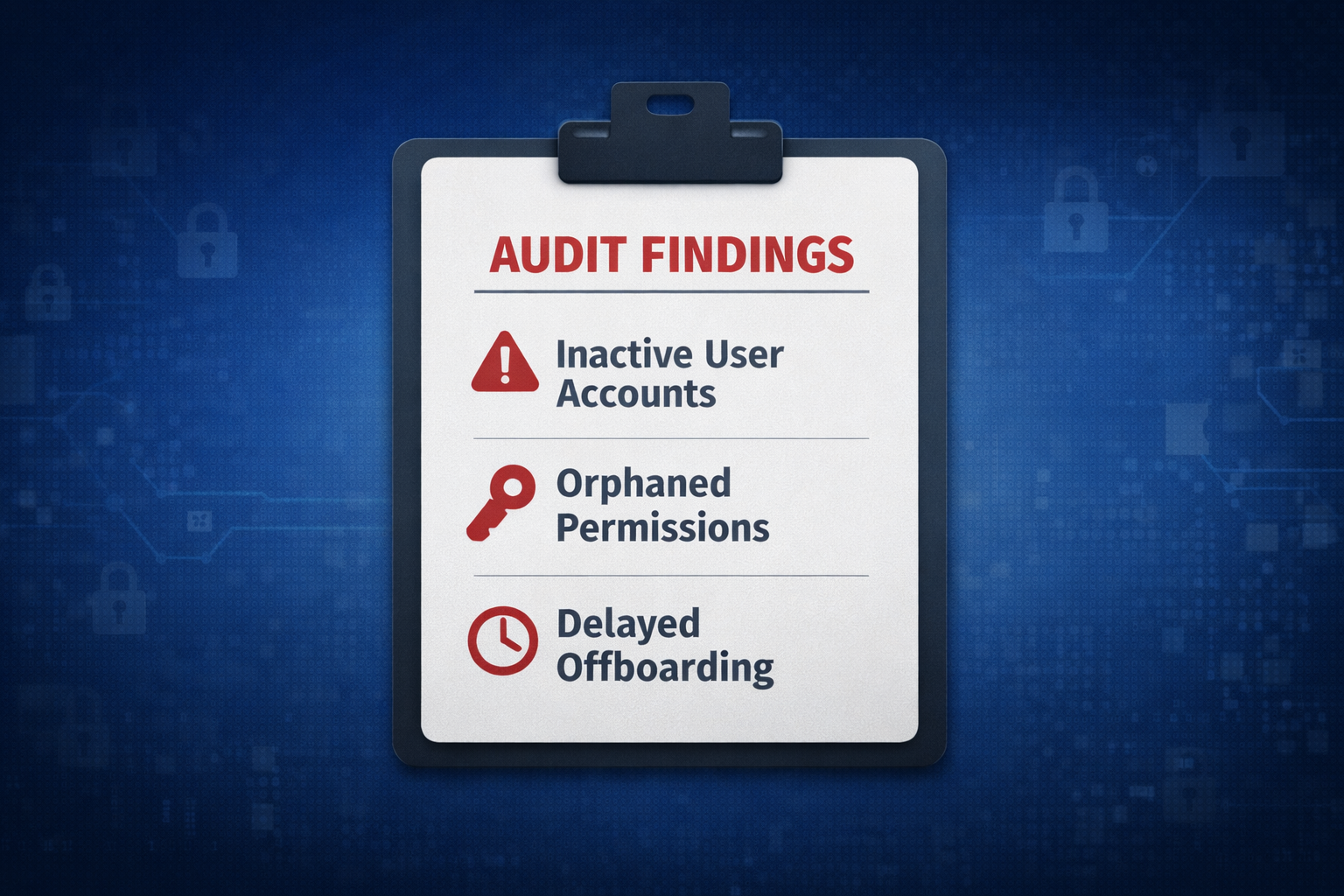
Pass SOX, SOC 2, and ISO 27001 Audits Without Chasing Leavers
If you’ve been through a SOX, SOC 2, or ISO 27001 audit, you’ve probably heard a version of the same question:
Show us how you remove access when someone leaves, and prove it happens consistently.
That “prove it” is where teams get stuck - especially when critical SaaS apps don’t support SCIM and user management is still done by hand in admin consoles, spreadsheets, Jira tickets, or Slack pings.
The result is predictable: delayed or forgotten deprovisioning, stale group memberships, and lingering privileges that create both real security risk and audit findings.
This post explains why manual user management keeps failing audits, how Veraproof Scimify helps you simplify evidence collection and reduce access-control findings by automating joiner/mover/leaver workflows across apps that don’t natively support SCIM.
Why “manual deprovisioning” keeps turning into audit findings
Auditors don’t just want a policy that says “we remove access.” They test whether it actually happens, on time, and with evidence.
In practice, manual offboarding fails in a few common ways:
1) Access isn’t revoked in a timely manner
Even well-run teams miss deadlines when deprovisioning relies on human steps and handoffs. Guidance on IT general controls (often relevant in SOX contexts) explicitly calls out the risk of logical access permissions not being revoked in a timely manner and highlights timely revocation upon termination as a preventive control.
2) Offboarding is fragmented across “too many apps”
HR disables the primary identity… but the leaver still exists in:
- incident tooling
- customer support platforms
- code repos
- finance/expense systems
- MDM portals
- BI and analytics tools
- shared vaults
- internal knowledge bases
If any of those are manual, you’re back to ticket-chasing and hoping nothing was missed. Apps like GitHub, Jamf Pro, and Looker Cloud are frequently in audit scope for access controls, yet they don’t natively support SCIM—making them prime candidates for manual deprovisioning gaps.
3) Permissions decay over time
Movers (role changes) are as risky as leavers. People accumulate access, keep old group memberships, and end up with permissions that no longer match job responsibilities.
SOC 2’s Trust Services Criteria emphasize that organizations should remove credentials when access is no longer authorized.
4) Evidence is painful (and sometimes incomplete)
Manual access reviews and offboarding processes often produce:
- incomplete user lists
- untimely reviews
- insufficient proof of review
- slow remediation after issues are found
These are well-known pitfalls in manual access review controls.
What auditors are really asking for (SOX, SOC 2, ISO 27001)
Different frameworks, same core expectation: control access and remove it promptly when it’s no longer needed.
SOC 2 (Security / Common Criteria)
SOC 2’s Trust Services Criteria include explicit expectations that:
- users are registered/authorized before credentials are issued, and
- credentials are removed when access is no longer authorized (CC6.2)
ISO 27001:2022 (Annex A access management controls)
ISO 27001:2022 includes controls covering identity lifecycle and access rights management, commonly referenced as:
- A.5.16 Identity management (manage identities through their lifecycle)
- A.5.18 Access rights (assign, modify, and revoke access rights)
SOX (IT General Controls supporting ICFR)
SOX programs commonly rely on ITGCs around logical access, ensuring only appropriate access to systems relevant to financial reporting, and that access is revoked on termination. Practical SOX/ICFR guidance highlights timely termination deprovisioning and the operational difficulty of manual access review controls.
The root cause: SCIM stops at the IdP… and some key apps don’t have it
Many organizations have automated lifecycle management up to the IdP (Okta, Entra ID, Google Workspace, etc.). But the moment a downstream app doesn’t support SCIM, you get a “compliance gap”:
- HR marks a termination ✅
- IdP account is disabled ✅
- 12 downstream apps update automatically ✅
- 3 high-impact apps require manual removal ❌
- audit sample picks one of those 3 apps ❌
That’s how small process gaps turn into repeated findings.
Common examples include GitHub Teams (code access controls), Jamf Pro admin accounts (device management privileges), and Looker Cloud (data analytics access). All frequently audited, none with native SCIM support.
How Veraproof Scimify fixes it: “SCIM in, native API out”
Scimify is middleware that lets you keep SCIM as your “source of truth” for identity lifecycle changes - even when a downstream app doesn’t speak SCIM. Your Idp and/or identity governance tools can continue to talk standard SCIM, which simplifys your enterprise identity stack, removes the hassle of rolling your own custom scripts or manual tasks and allows you to integrate with any Idp or IGA tool.
What Scimify does
- Receives SCIM from your IdP (joiner/mover/leaver + group changes)
- Translates those changes into each app’s native API calls
- Automates deprovisioning (disable/remove users, revoke tokens where supported, remove from groups/teams/roles)
- Keeps an audit trail of what changed, when, and why (critical for audits)
So instead of relying on tickets and manual admin work, you get a consistent, automated lifecycle path across all apps, whether they natively support SCIM or not.
Why automation reduces audit pain (and not just risk)
1) Fewer exceptions
Automation eliminates the “someone forgot” class of problems that drives most access-control findings.
2) Cleaner evidence
When access changes are driven centrally (SCIM events) and executed consistently, it becomes much easier to produce:
- termination → access removal timestamps
- group membership change history
- proof of least-privilege enforcement via role/group mappings
This aligns directly with expectations like SOC 2 CC6.2 credential removal.
3) Less reliance on manual access reviews as a safety net
Access reviews are still valuable, but when deprovisioning is automated, reviews become a verification layer rather than the only line of defense. This is consistent with ICFR/ITGC guidance that positions access reviews as monitoring/compensating controls when preventive controls exist.
Common audit findings Scimify helps you avoid
Here are the findings we repeatedly see in the wild when lifecycle management is manual:
- Leaver accounts still active in one or more applications
- Excess privileges due to role changes not being reflected in app permissions
- Orphaned users created directly in apps outside the IdP lifecycle
- Inconsistent evidence (no timestamps, missing approvals, incomplete access lists)
- Slow remediation after access review issues are identified
Scimify directly targets these failure modes by making lifecycle enforcement consistent across your app landscape, including commonly audited systems like GitHub, Jamf Pro, and Looker Cloud that lack native SCIM support.
By letting Scimify automate identity lifecycle events across all your SaaS applications, you dramatically cut audit overhead, reduce findings, and give your security program a powerful preventive control. Your team gets time back, your auditors get cleaner evidence, and your organization stays nimble - no more chasing down “who has access” at the last minute. Ready to transform access audits from a headache to an afterthought? Learn more or sign-up here.